
Custom Driveway Pavers in Clearwater, FL
Elevate your curb appeal with a driveway built for vehicle loads: a deeper base, a strong interlocking pattern and borders that frame the house.

A paver driveway is a driveway surface of interlocking concrete or clay pavers set on a deeper compacted aggregate base, built to carry vehicle loads while remaining repairable one paver at a time.
A driveway is not just a bigger walkway
The driveway is the first thing people see and the surface that carries the most weight on your property. That changes how it has to be built. Compared with a walkway or patio, a driveway gets a deeper aggregate base compacted in more layers, a pattern chosen to resist turning tires, and an edge restraint strong enough to stop pavers creeping toward the lawn.
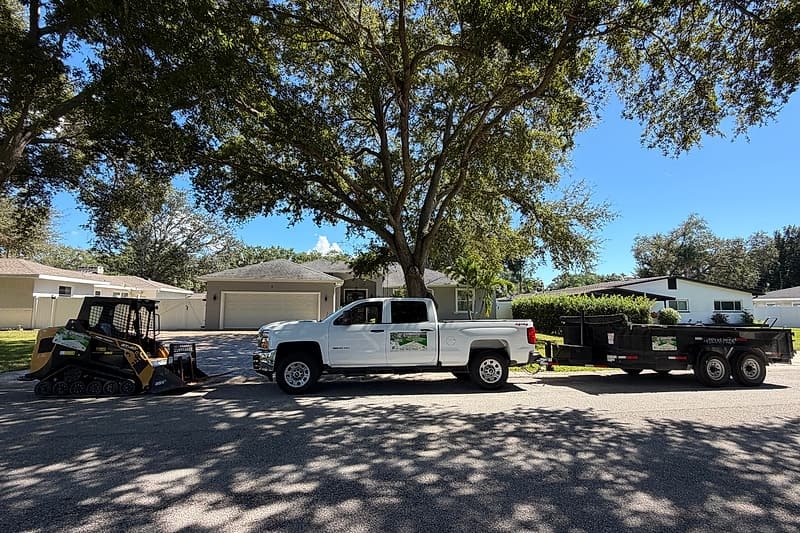
Most of our driveway projects start with removing an old concrete or asphalt drive. We bring our own track loader, truck and dump trailer for demolition and hauling, then check the slopes so water runs to the street rather than toward the garage. Where the driveway meets the city sidewalk or street apron, local permit rules may apply; we go over that during the estimate.
Pavers give you design options a slab can’t: a contrasting border, a band where the drive meets the walkway, or the same paver carried through to the front entry path. If your lot sends water across the driveway, it’s the right time to add drainage before the new surface goes in.
What a paver driveway gives you
Curb appeal
Pattern, color and borders turn the driveway into part of the design of the house instead of a gray slab.
Strength through interlock
On a deep, compacted base, the pavers lock together and spread vehicle loads across the surface.
Spot repairs
An oil stain or a settled section is fixed by replacing or relaying the affected pavers, not by patching concrete.
No cracks to watch spread
Joints between pavers absorb small movement that would otherwise show up as cracks across a slab.
Driveway projects we handle
- Full driveway replacement
- Old concrete or asphalt removed and hauled away, new base and pavers installed.
- Extensions and parking pads
- Widening the drive or adding a pad for an extra car, boat or trailer.
- Borders and bands
- Contrasting soldier courses or ribbons that frame the drive or mark the transition to the walkway.
- Matching walkways
- Carrying the driveway paver to the entry so the front of the house reads as one design.
What shapes a driveway project and estimate
Driveways vary more than most projects because of demolition, size and slope. These are the factors we measure and discuss.
| Decision | What we look at with you |
|---|---|
| Removal of the old drive | Breaking out and hauling away existing concrete or asphalt, which depends on thickness and area. |
| Base depth | A thicker compacted aggregate base than a patio needs, sized for cars and occasional heavier vehicles. |
| Pattern | Herringbone (at 45° or 90°) interlocks best under turning tires; other patterns can be used with the right paver. |
| Paver type and thickness | Concrete or clay pavers rated for vehicle traffic, in the color and size that suit the house. |
| Slope and drainage | Grades that move water to the street and away from the garage, plus drains if water crosses the drive. |
| Borders and transitions | Edge courses, the joint with the garage slab and how the drive meets the sidewalk or apron. |
How a paver driveway goes in
Measure and check grades
We measure the drive, check slopes and talk through pattern, color and borders.
Demolition and hauling
The old surface is broken out and hauled away with our own equipment.
Base in layers
Aggregate is placed and compacted in lifts to the depth vehicle traffic needs.
Lay the pattern
Pavers are laid on a screeded bedding layer, with borders and cuts at the garage and street.
Restrain, sand and compact
Edges are locked, joint sand is swept in and the surface is compacted so it is ready to drive on.
Paver work built for traffic
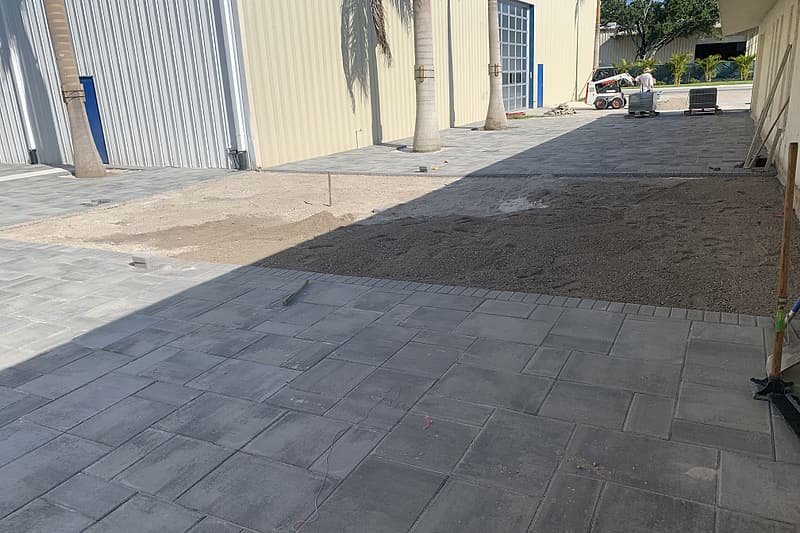
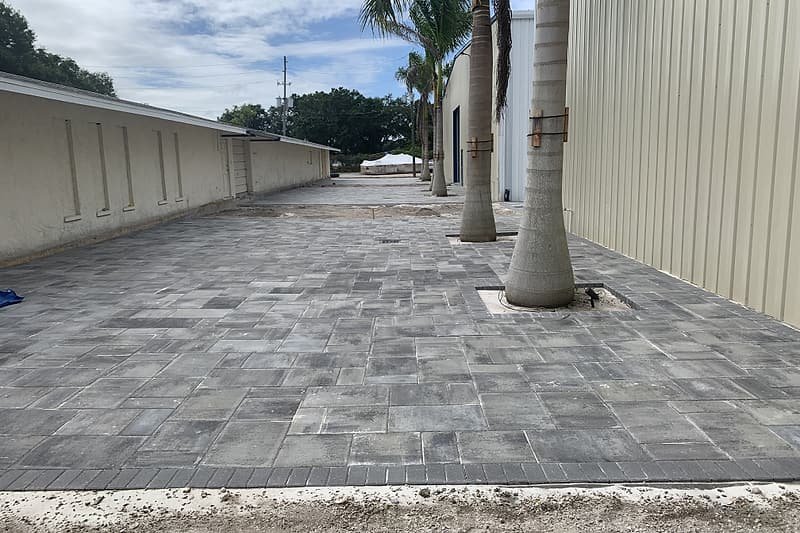
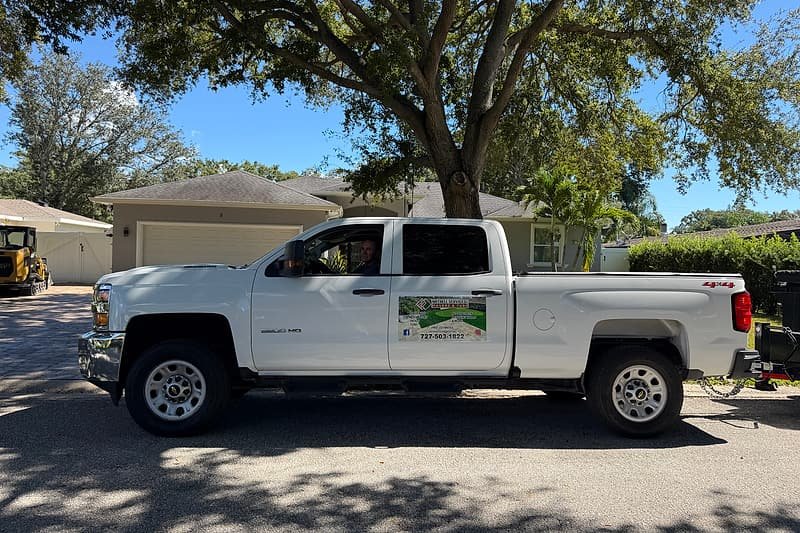
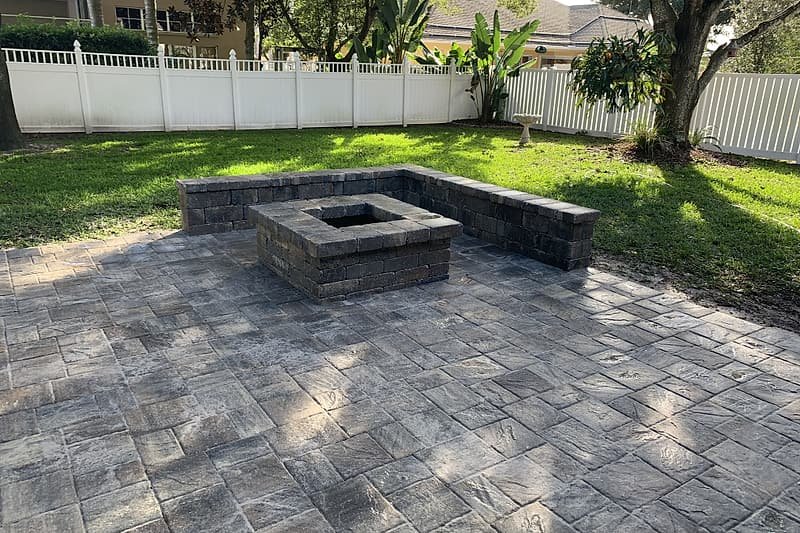
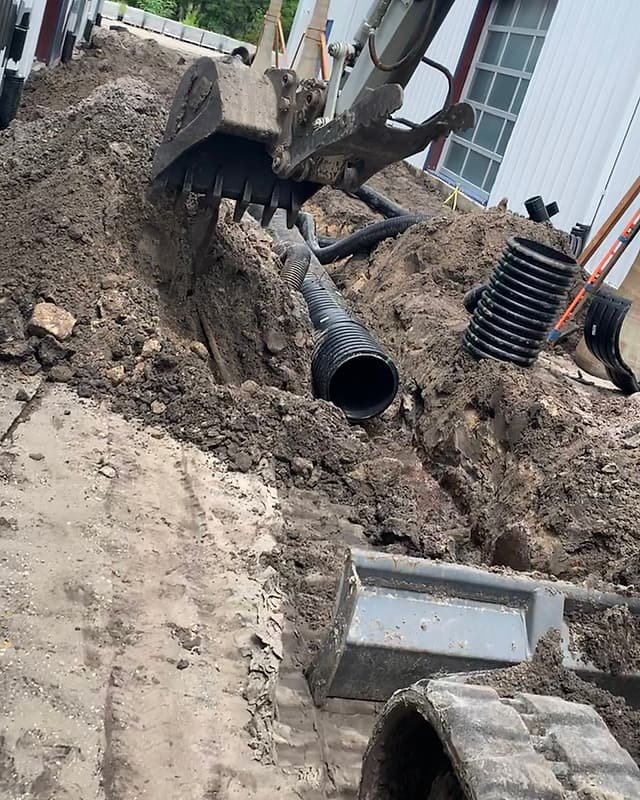
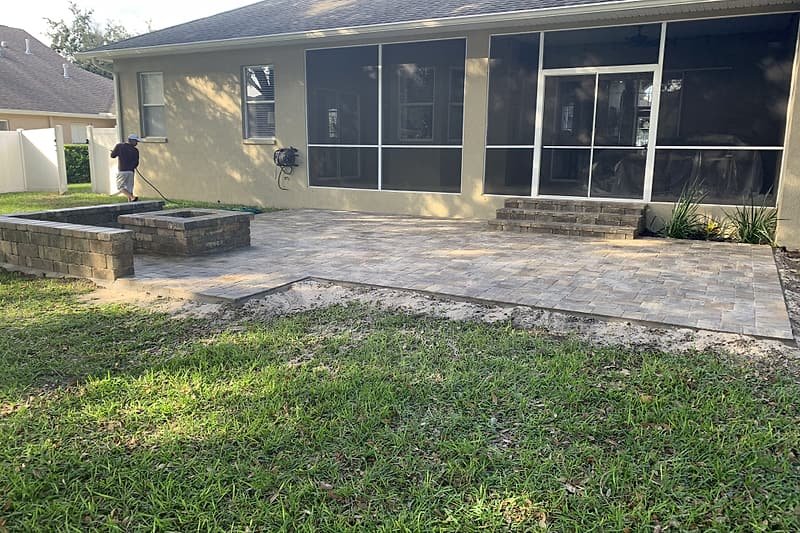
Photos from Nathell Services job sites, including our equipment and large-format paving built for heavy use. See more of our work

Driveway Pavers: common questions
Still deciding? Text a photo of your yard and ask Edilson directly.
Is a paver driveway better than concrete?
Pavers cost more upfront than a plain concrete driveway, but they don’t crack across the surface, can be repaired in sections and offer far more design options. Many homeowners choose them when the existing concrete has cracked or settled and they want a longer-lasting, better-looking replacement.
Will a paver driveway sink or rut?
Sinking and rutting almost always come from a thin or poorly compacted base. Driveways get a deeper base, compacted in layers, and an edge restraint along the sides. If a small area ever settles, those pavers are lifted, the base corrected and the same pavers relaid.
How soon can I drive on new pavers?
Pavers don’t need to cure. Once the joint sand is swept in and the surface has been compacted, the driveway can generally be used. If polymeric sand is used, we’ll tell you how long to wait after it is activated before washing the surface or driving across it.
Can you put pavers over my existing concrete driveway?
For driveways we generally recommend removing the old concrete. Overlaying a driveway raises the surface at the garage and street, and any movement in the old slab carries into the pavers. We’ll look at your drive and explain the options honestly.
What about oil stains?
Fresh spills come out more easily on sealed pavers, which is one reason some homeowners seal their driveway. A paver that is badly stained can also simply be replaced. We can keep a few spare pavers from your project for that purpose.
Do I need a permit for a new driveway?
It depends on the city and on whether the work reaches the sidewalk or the apron in the public right-of-way. We’ll go over what applies at your address during the estimate so there are no surprises.
Driveway Pavers around Clearwater
Based in Clearwater, we take on projects within roughly 50 miles across Pinellas County and nearby parts of Hillsborough and Pasco. Send your address and we’ll confirm right away whether it’s in range.
We currently do not serve Riverview, Apollo Beach or Sarasota.
See all service areas- Clearwater
- Largo
- Dunedin
- Safety Harbor
- Palm Harbor
- Oldsmar
- Tarpon Springs
- Belleair
- Seminole
- Pinellas Park
- St. Petersburg
- Indian Rocks Beach
- Tampa
- Westchase
Your outdoor transformation starts here
Text a few photos of your yard and a quick description of what you have in mind. Edilson will reply to talk through the project and set up a time to measure.
Prefer a form? Request an estimate online
(727) 503-1822 · nathellservicesfl@gmail.com · English & Spanish