
Beautifully Crafted Brick Pavers in Clearwater, FL
Entries, walkways, steps and outdoor rooms laid on a base built to stay flat, with straight joints, clean cuts and solid edges.
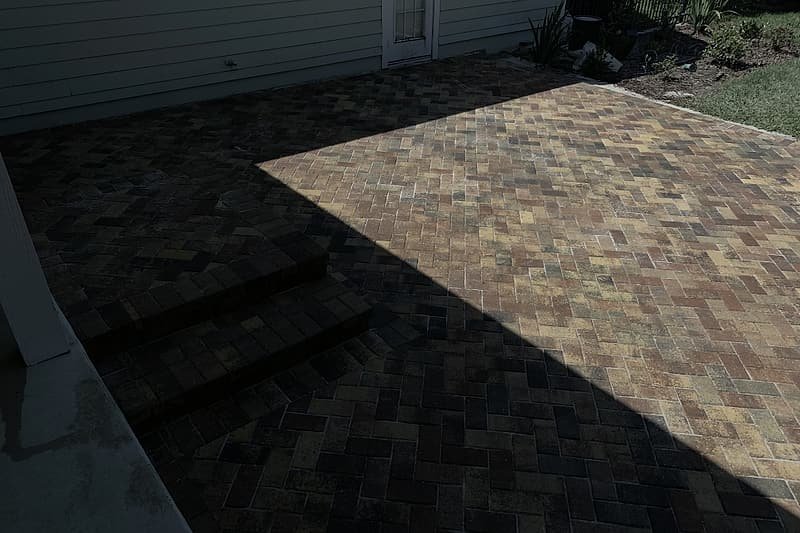
Brick paver installation builds walkways, entries, patios and steps from interlocking clay or concrete units set on a compacted base, creating a surface that flexes with the ground and can be repaired one paver at a time.
Pavers are only as good as what’s underneath
People say “brick pavers” for almost any interlocking paver, and both main types work well in Florida. Clay brick pavers are fired, so their color runs all the way through and stays warm and rich for decades. Concrete pavers come in more shapes, sizes and blends, from classic brick formats to large modern slabs. We’ll show you both and help you choose based on the house, the use and your budget.
Whichever you pick, the result depends on the same fundamentals. The area is excavated and graded to slope away from the house, a crushed aggregate base is compacted in layers, a thin bedding layer is screeded flat, and the pavers are laid in a pattern that suits the traffic they will carry. Cuts are made cleanly at edges and around obstacles, a restraint locks the perimeter, and joint sand is swept in and compacted so the whole surface interlocks.
This page covers walkways, entries, steps and general paver work. If you are planning something specific, see our pages on paver driveways, patios and lanais and pool decks, each of which has its own base and material considerations.
Why pavers instead of poured concrete
Repairs without patches
If a section settles or a pipe needs access, the pavers are lifted and relaid. There is no visible patch like on a slab.
Moves with the ground
Individual units on a flexible base handle small ground movement without the long cracks that open in concrete slabs.
Ready to walk on
There is no curing time for the pavers themselves. Once the joints are sanded and compacted, the surface is usable.
Design freedom
Patterns, borders, color blends and accent bands let the paving match the architecture instead of just covering ground.
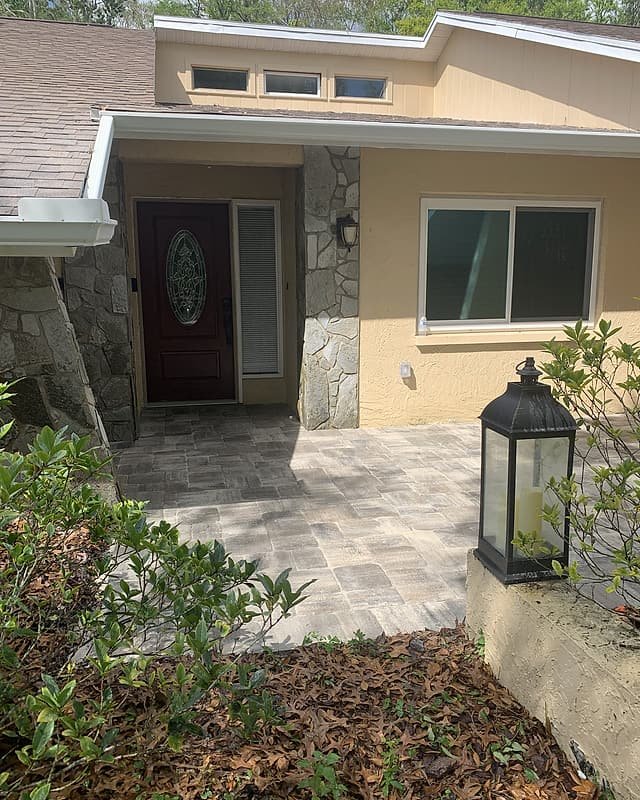
Where brick and concrete pavers work
- Front entries and walkways
- The path from the driveway to the door, often with a border course that frames it.
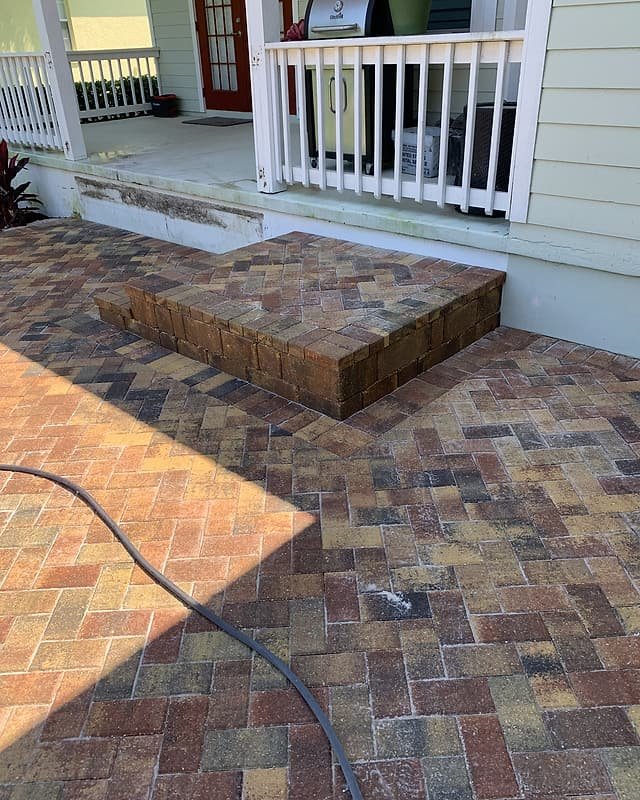
- Steps and landings
- Paver treads and risers at porches and patio changes in level, built on a solid core.
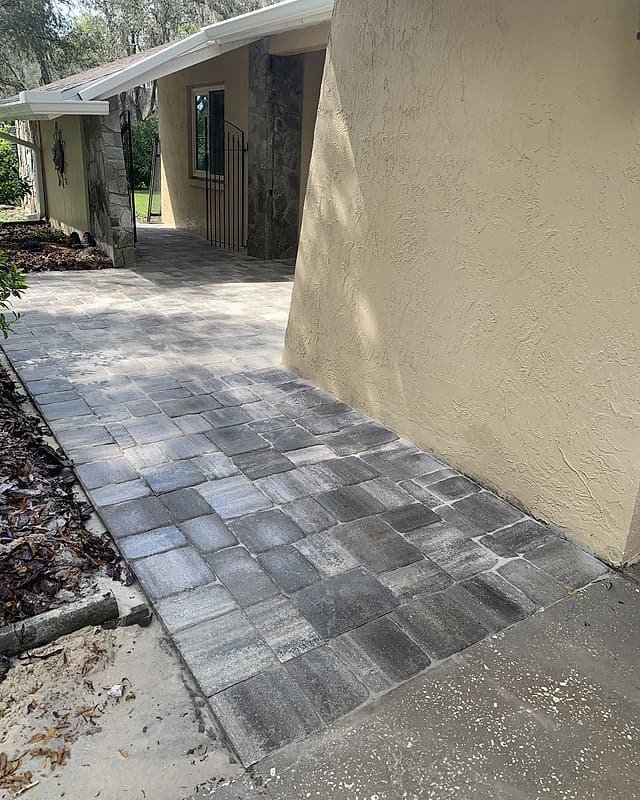
- Side walks and service paths
- Practical paths to gates, sheds and equipment pads along the side of the house.
- Borders for turf and beds
- A paver edge that gives turf and planting beds a clean, permanent line.
- Commercial walkways
- Larger runs between buildings, where pattern, drainage grates and tree openings all have to line up.
Choices that shape a paver project
These decisions affect how the paving looks, how it holds up and what it costs. We bring samples and talk through them on site.
| Decision | What we look at with you |
|---|---|
| Material | Clay brick for through-body color and a traditional look, or concrete pavers for more shapes, sizes and blends. |
| Pattern | Herringbone for strength and a classic look, running bond for a clean linear feel, basket weave or multi-size random for texture. |
| Color and border | A single blend or a contrasting soldier course along the edges to frame the space. |
| Base | Depth of compacted aggregate based on the traffic the surface will carry and the soil it sits on. |
| Edge restraint | The concealed edge that stops pavers from creeping outward, which matters most along lawn and bed edges. |
| Joint sand | Regular sand or polymeric sand, which hardens to resist washout and discourage weeds and ants. |
| Sealing | Optional. A sealer can deepen color and resist stains; we’ll tell you honestly whether your project needs it. |
How we install pavers
Layout and elevations
We mark the area, set finished heights at doors and existing slabs, and plan the slope so water runs away from the house.
Excavate
Soil, roots and any old concrete are removed to the depth the base needs.
Base and compaction
Crushed aggregate goes in layers, each compacted with a plate compactor until it is firm.
Bedding and pattern
A bedding layer is screeded flat and the pavers are laid in pattern, keeping joints straight with string lines.
Cut, edge, sand and compact
Edges are cut cleanly, restraints installed, joint sand swept in and the surface compacted to lock it together.
From our job sites
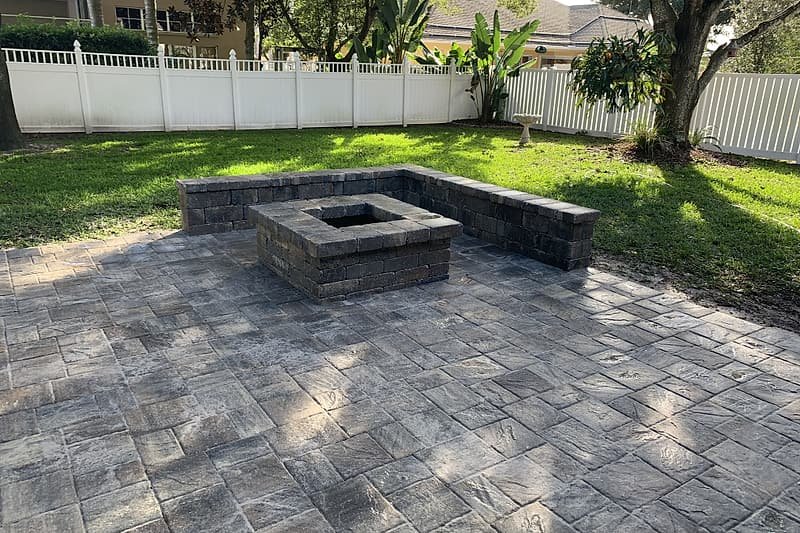
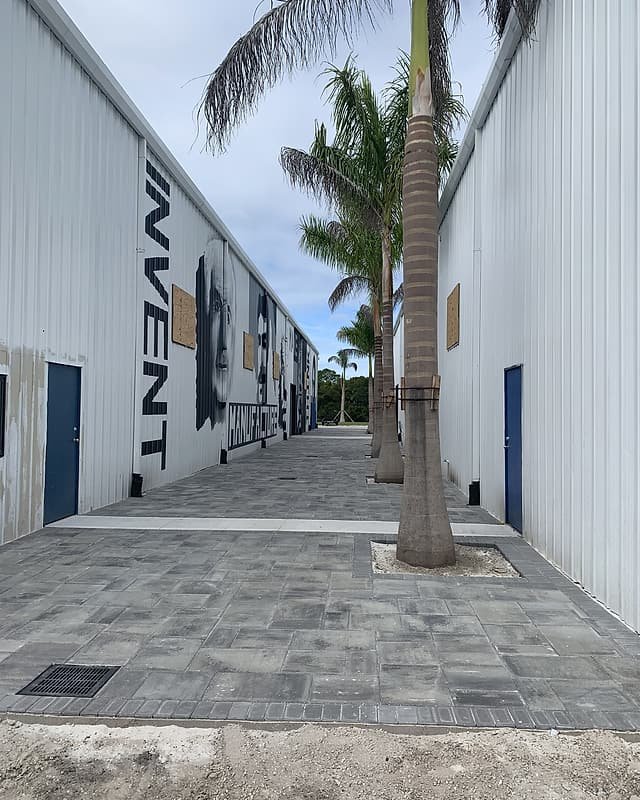
Photos from Nathell Services projects — no stock images. See more of our work

Brick Pavers: common questions
Still deciding? Text a photo of your yard and ask Edilson directly.
What is the difference between clay brick pavers and concrete pavers?
Clay brick pavers are made from fired clay, so the color runs through the whole unit and resists fading. Concrete pavers are cast, which allows many more shapes, sizes and color blends, including large slabs. Both are durable on a proper base; the choice usually comes down to look, pattern and budget.
Are pavers better than poured concrete?
For most walkways and outdoor spaces, pavers offer real advantages: they flex with the ground instead of cracking, can be lifted and relaid for repairs, and give far more design options. Poured concrete is usually cheaper upfront. We’ll lay out the trade-offs for your project so you can decide.
What is polymeric sand and do I need it?
Polymeric sand is joint sand mixed with binders that harden after it is wetted. It resists washing out in heavy rain and makes it harder for weeds and ants to settle in the joints. It is a good choice for most residential paving in our area; we’ll recommend it where it fits.
Do pavers need to be sealed?
Not always. Sealing is optional and mainly cosmetic and protective: it can enhance color and make stains easier to clean. Pool decks and high-traffic areas benefit most. If we think sealing is worth it for your project, we’ll explain why and when it should be done.
Can you install pavers over an existing concrete walkway?
Sometimes. If the slab is sound and there is enough height at doors and thresholds, thinner pavers can be set over it. Cracked, sunken or uneven slabs are better removed so the new paving gets a proper base. We check the slab and the door heights before recommending either option.
Will weeds grow between the pavers?
A well-compacted base, a solid edge restraint and properly filled joints leave very little room for weeds. Polymeric sand helps further. Occasional seeds that land on the surface can still sprout, but they pull out easily and don’t damage the paving.
Brick Pavers around Clearwater
Based in Clearwater, we take on projects within roughly 50 miles across Pinellas County and nearby parts of Hillsborough and Pasco. Send your address and we’ll confirm right away whether it’s in range.
We currently do not serve Riverview, Apollo Beach or Sarasota.
See all service areas- Clearwater
- Largo
- Dunedin
- Safety Harbor
- Palm Harbor
- Oldsmar
- Tarpon Springs
- Belleair
- Seminole
- Pinellas Park
- St. Petersburg
- Indian Rocks Beach
- Tampa
- Westchase

Your outdoor transformation starts here
Text a few photos of your yard and a quick description of what you have in mind. Edilson will reply to talk through the project and set up a time to measure.
Prefer a form? Request an estimate online
(727) 503-1822 · nathellservicesfl@gmail.com · English & Spanish